
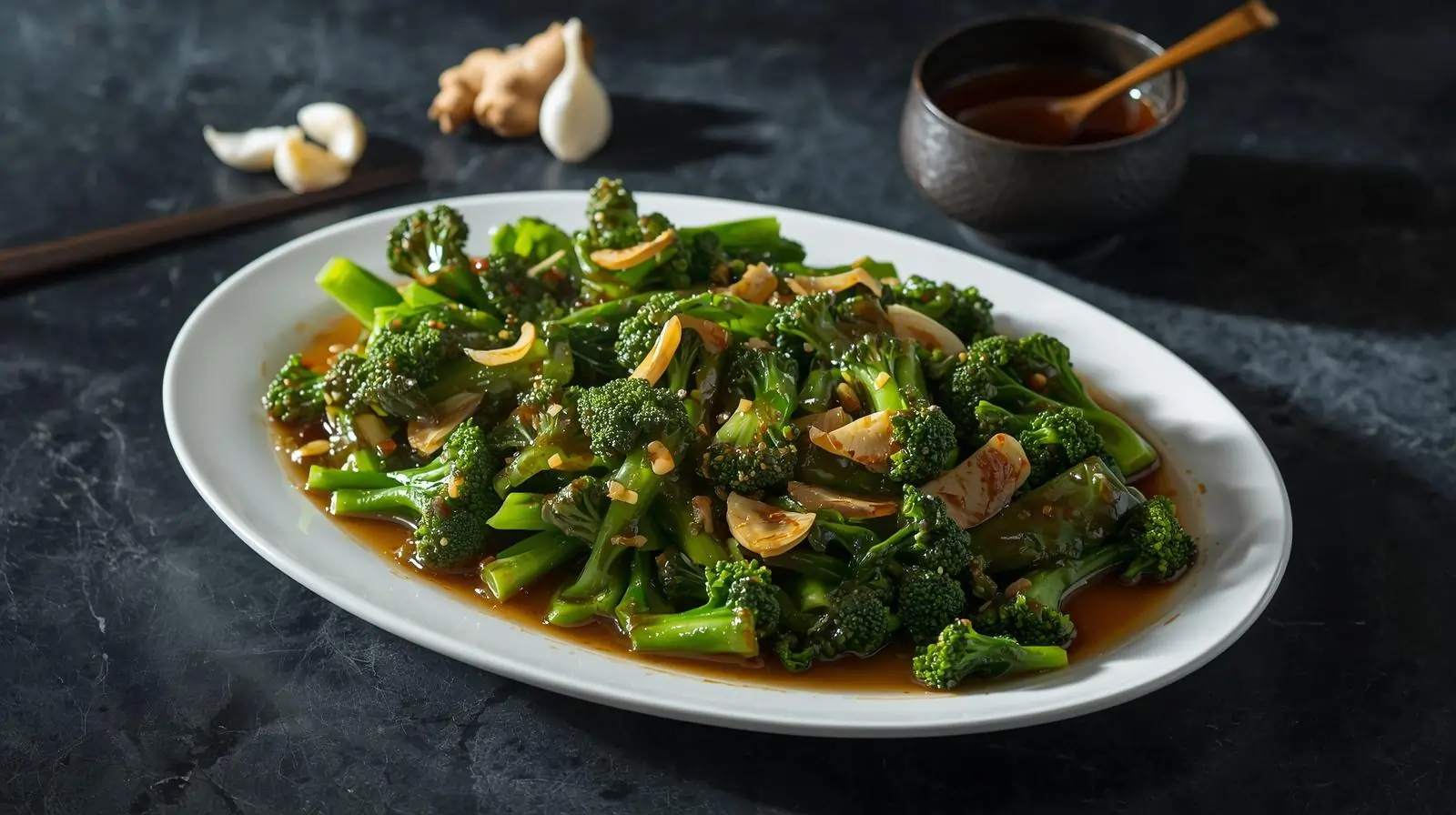
If you’ve ever ordered Chinese broccoli at a dim sum restaurant and thought, “I need to figure out how to make this at home,” you’re in the right place. Gai lan (also called Chinese broccoli or Chinese kale) is one of those vegetables that looks intimidating but cooks up beautifully in under 10 minutes. Tender stems, glossy sauce, that unmistakable slightly bitter bite that somehow works perfectly with everything.
I started making this at home after realizing I was spending way too much money ordering it as a side dish every single week. Turns out it’s almost embarrassingly simple to pull off.
What Is Gai Lan?
Gai lan is a leafy green vegetable popular in Chinese and Cantonese cooking, known for its thick stems, dark green leaves, and small white flowers. It’s sometimes called Chinese broccoli or Chinese kale, though it tastes quite different from regular broccoli, slightly more bitter, more robust, and honestly more interesting.
You’ll find it in most Asian grocery stores year-round. FYI, if you can’t find gai lan, broccolini makes a very solid substitute and cooks up almost the same way.
Ingredients You’ll Need
Here’s what goes into a classic Chinese gai lan recipe:
For the vegetables:
- 1 bunch of fresh gai lan (Chinese broccoli), ends trimmed
- 3–4 cloves garlic, thinly sliced
- 1 tablespoon neutral oil (vegetable or avocado oil)
- Salt for blanching water
For the sauce:
- 2 tablespoons oyster sauce
- 1 tablespoon light soy sauce
- 1 teaspoon sesame oil
- 1 teaspoon sugar
- 2 tablespoons water
- 1 teaspoon cornstarch (optional, thickens the sauce slightly)
That’s it. Simple pantry staples that come together into something that genuinely tastes like restaurant-quality food.
How to Make Chinese Gai Lan Recipe
Step 1: Prep the Gai Lan
Wash the gai lan thoroughly under cold running water, checking between the leaves for any grit. Trim about half an inch off the bottom of the stems; the very ends can be tough and fibrous.
If your stems are particularly thick (thicker than a finger), slice them lengthwise down the center so they cook at the same rate as the thinner ones. This little detail makes a big difference in the final texture.
Step 2: Make the Sauce
In a small bowl, whisk together the oyster sauce, soy sauce, sesame oil, sugar, water, and cornstarch until fully combined. Set it aside, you’ll need it ready to go the moment the gai lan hits the pan.
Taste the sauce before cooking. It should be savory, slightly sweet, and deeply aromatic. Adjust with a little extra oyster sauce or a pinch more sugar, depending on your preference.
Step 3: Blanch the Gai Lan
Bring a large pot of water to a rolling boil and add a generous pinch of salt. Drop the gai lan and blanch for 1.5 to 2 minutes, just until the stems turn bright green and are barely tender. Don’t walk away here; overcooked gai lan goes limp and sad very fast.
Immediately transfer the gai lan to a plate or serving dish. You can skip the ice bath, just get it out of the water quickly, and it’ll hold its color fine.
Step 4: Fry the Garlic
Heat a small pan or wok over medium-high heat and add the oil. Once it shimmers, add the sliced garlic and fry for 30–45 seconds until it turns light golden and fragrant. Watch it carefully, garlic goes from golden to burnt in about five seconds flat.
Pour the sauce mixture directly into the pan with the garlic. Stir quickly, it’ll thicken within 30 seconds. Remove from heat immediately.
Step 5: Plate and Serve
Arrange the blanched gai lan on a serving plate and pour the hot garlic sauce directly over the top. Serve immediately while everything is still steaming hot. That’s genuinely all there is to it.
Tips for the Best Gai Lan
- Choose younger, thinner stems. Older, thicker stalks can be tough and overly bitter. Look for bunches with firm stems and dark green leaves without yellowing.
- Don’t skip the blanching. Some recipes go straight to stir-frying, but blanching first gives you that restaurant-style tender-crisp texture that makes gai lan so satisfying.
- Use good oyster sauce. IMO, the quality of your oyster sauce makes or breaks this dish. Lee Kum Kee Premium is the go-to for a reason.
- Serve it fast. Gai lan waits for no one. Get everything else on the table first, then make this last.
Variations Worth Trying
With Ginger
Add a teaspoon of freshly grated ginger to the garlic oil for a warmer, more aromatic sauce. Works beautifully.
With Shaoxing Wine
A splash of Shaoxing rice wine added to the sauce adds depth and that unmistakable restaurant flavor that’s hard to pin down but instantly recognizable.
Steamed Instead of Blanched
Steam the gai lan for 3–4 minutes over boiling water instead of blanching. The texture stays slightly firmer, and the flavor is a touch sweeter. Both methods work; it really comes down to personal preference.
What to Serve With Chinese Gai Lan
Gai lan works as a side dish alongside almost any Chinese main course. Here’s where it fits best:
- Steamed jasmine rice and a soy-glazed protein
- Cantonese roast duck or char siu pork
- Stir-fried noodles or lo mein
- Congee for a light, comforting meal
- Alongside dim sum favorites like har gow or siu mai
Ever noticed how the best dim sum restaurants always have a perfect plate of gai lan on nearly every table? There’s a reason for that.
Frequently Asked Questions
What does gai lan taste like?
Gai lan has a mildly bitter, slightly earthy flavor with tender stems and soft leaves. It’s less sweet than regular broccoli and has more depth, closer in character to rapini, but milder and more versatile.
Can I use regular broccoli instead of gai lan?
You can, but the flavor and texture will differ. Broccolini is the closest substitute, with the same thin stems, similar bitterness, and it cooks in about the same time. Regular broccoli florets work in a pinch, but the dish won’t taste quite the same.
Is gai lan the same as Chinese broccoli?
Yes, gai lan and Chinese broccoli are the same vegetable, just different names. You’ll see both terms used interchangeably at grocery stores and restaurants, depending on the region.
How do I store fresh gai lan?
Wrap unwashed gai lan in a damp paper towel, place it in a bag, and refrigerate for up to 3 days. Use it as soon as possible, the leaves yellow quickly, and the stems get tough as it ages.
Final Thoughts
Chinese gai lan is one of those recipes that delivers maximum flavor for minimum effort, and once you nail the technique, you’ll make it on repeat. Blanch the garlic, fry it, and pour it over the sauce. Done in under 15 minutes total.
It’s the kind of dish that makes a simple weeknight dinner feel a little more special without adding any real stress. Give it a try this week; your takeout bill might start looking a little more manageable.

Chinese Gai Lan Recipe
4
servings10
minutes10
minutes120
kcalIngredients
- For the vegetables:
1 bunch of fresh gai lan (Chinese broccoli), ends trimmed
3–4 cloves garlic, thinly sliced
1 tablespoon neutral oil (vegetable or avocado oil)
Salt for blanching water
- For the sauce:
2 tablespoons oyster sauce
1 tablespoon light soy sauce
1 teaspoon sesame oil
1 teaspoon sugar
2 tablespoons water
1 teaspoon cornstarch (optional, thickens the sauce slightly)
Directions
- Prep the Gai Lan
Wash the gai lan thoroughly under cold running water, checking between the leaves for any grit. Trim about half an inch off the bottom of the stems; the very ends can be tough and fibrous. - Make the Sauce
In a small bowl, whisk together the oyster sauce, soy sauce, sesame oil, sugar, water, and cornstarch until fully combined. Set it aside, you’ll need it ready to go the moment the gai lan hits the pan. - Blanch the Gai Lan
Bring a large pot of water to a rolling boil and add a generous pinch of salt. Drop the gai lan and blanch for 1.5 to 2 minutes, just until the stems turn bright green and are barely tender. Don’t walk away here; overcooked gai lan goes limp and sad very fast. - Fry the Garlic
Heat a small pan or wok over medium-high heat and add the oil. Once it shimmers, add the sliced garlic and fry for 30–45 seconds until it turns light golden and fragrant. Watch it carefully, garlic goes from golden to burnt in about five seconds flat. - Plate and Serve
Arrange the blanched gai lan on a serving plate and pour the hot garlic sauce directly over the top. Serve immediately while everything is still steaming hot. That’s genuinely all there is to it.