
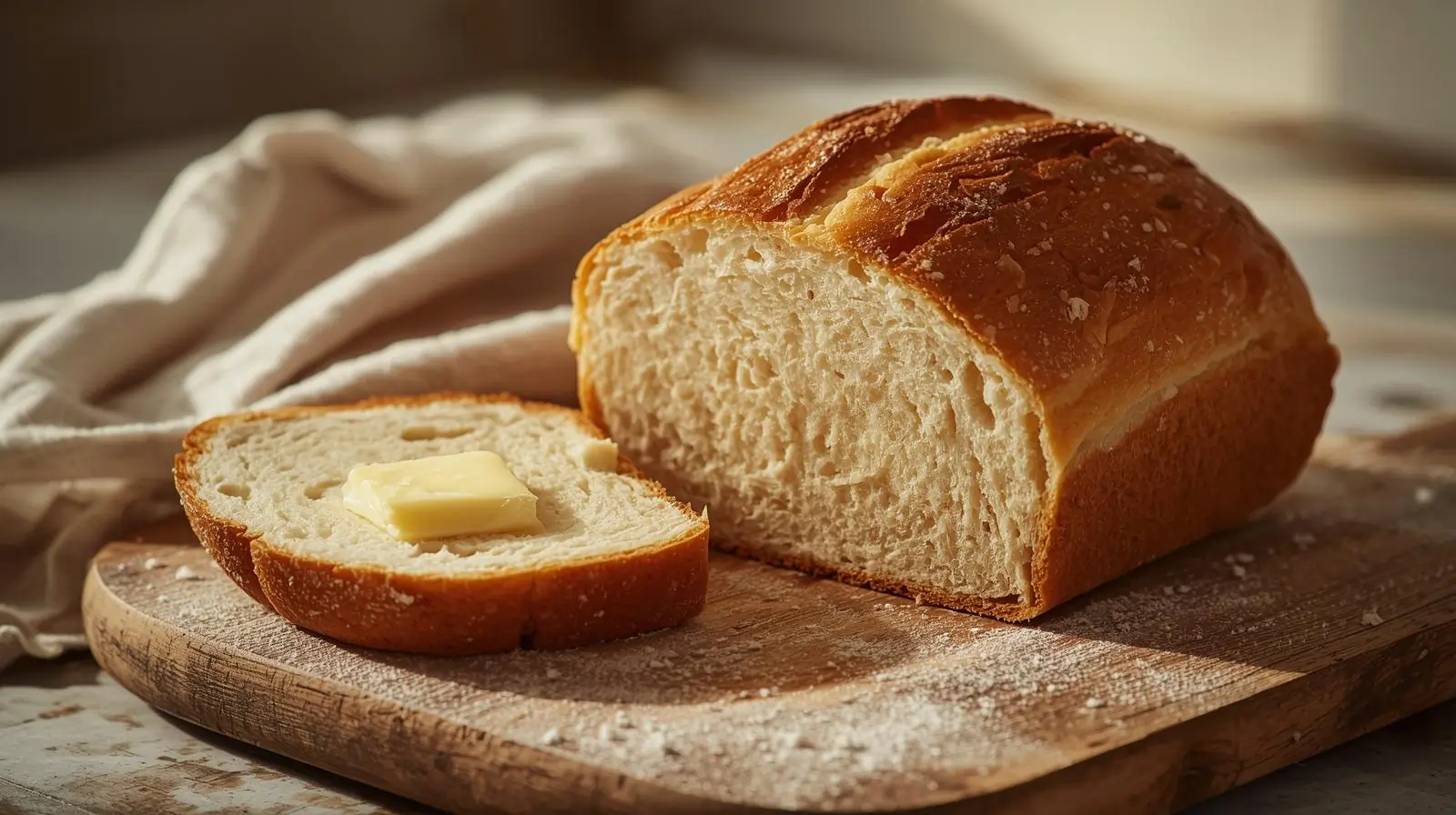
There’s something almost magical about pulling a freshly baked white loaf out of the oven. The smell alone is worth the effort, and with James Martin’s white bread recipe, the effort is honestly minimal. James Martin has spent decades championing proper British baking, and this recipe is proof that great bread doesn’t need twenty ingredients or a fancy stand mixer. Just flour, yeast, water, salt, and a little patience.
What Is James Martin White Bread Recipe?
James Martin white bread recipe is a classic hand-kneaded British white loaf made with strong white bread flour, fast-action yeast, salt, and warm water, baked until golden with a soft, springy crumb and a satisfying crust. No bread machine, no shortcuts, no stress. Just proper homemade bread, the way it should taste.
I’ll be honest, the first time I made this, I was convinced I’d over-kneaded it. Turns out I’d under-kneaded it. That’s the one thing bread won’t let you skip. But more on that in a moment.
Ingredients You’ll Need
Here’s what goes into James Martin’s white bread (makes 1 large loaf):
- 500g strong white bread flour, plus extra for dusting
- 7g fast-action dried yeast (one standard sachet)
- 1½ tsp fine salt
- 300ml warm water (roughly body temperature, not hot)
- 1 tbsp olive oil or vegetable oil
- 1 tsp caster sugar (helps activate the yeast)
That’s it. Six ingredients. No excuses not to try this one.
How to Make James Martin White Bread
Step 1: Activate the Yeast
Mix the warm water, sugar, and yeast in a jug and leave it for 5–10 minutes until it turns frothy. This tells you the yeast is alive and active. If nothing happens after 10 minutes, your water was probably too hot or too cold. Start again. FYI, water above 40°C kills yeast stone. Think warm bath, not boiling kettle.
Step 2: Make the Dough
Combine the flour and salt in a large mixing bowl, make a well in the centre, and pour in the yeast mixture and oil. Mix everything with your hands or a wooden spoon until a rough dough forms. It’ll look like a mess at first. That’s completely normal. Keep going.
Tip the dough onto a lightly floured surface and bring it together into a ball before you start kneading.
Step 3: Knead Properly
Knead the dough for a full 10 minutes by hand until it becomes smooth, elastic, and springs back when you poke it. This is the most important step in the whole recipe, and the one most people give up on too early. Under-kneaded dough produces a dense, heavy loaf. Ten minutes feels like forever. Do it anyway.
Push the dough away from you with the heel of your hand, fold it back, rotate, and repeat. You’ll feel it change; it goes from rough and sticky to genuinely silky. That’s when you know you’re there.
Step 4: First, prove
Shape the dough into a ball, place it in a lightly oiled bowl, cover with cling film or a damp tea towel, and leave it somewhere warm for 1 hour until it doubles in size. I usually put mine in a switched-off oven with just the light on; the gentle warmth is perfect.
Don’t rush this proof. The slower the rise, the better the flavour.
Step 5: Shape and Second Prove
Knock the dough back by punching it down gently, then shape it into a loaf and place it in a lightly greased 900g (2lb) loaf tin. Cover again and leave for another 30–45 minutes until it rises just above the rim of the tin.
This second proof is what gives the loaf its final structure and open crumb.
Step 6: Bake to Golden Perfection
Bake at 220°C (200°C fan) for 25–30 minutes until the top is deep golden brown and the loaf sounds hollow when you tap the base. That hollow knock is the baker’s best friend; it tells you the inside is fully cooked through.
Leave it on a wire rack to cool for at least 20 minutes before slicing. IMO, this is the hardest part of the entire recipe. The smell is absolutely ruthless.
Tips for a Better Loaf Every Time
- Use strong bread flour, not plain flour. Strong flour has more gluten, which gives the bread its structure and chew. Plain flour produces a flat, crumbly result.
- Don’t skip the second proof. It’s tempting when you’re hungry, but it matters enormously for texture.
- Measure your water carefully. Too much water = sticky, unworkable dough. Too little = dry, crumbly loaf.
- Score the top before baking. A shallow slash down the centre with a sharp knife lets the loaf expand properly in the oven and gives it that classic bakery look.
What to Do with Your Homemade White Bread
Honestly, eating it warm with salted butter straight from the oven is the only correct answer. But beyond that:
- Toast it thick for beans on toast or a proper bacon sandwich
- Use it for sandwiches, the soft crumb holds fillings without going soggy
- Make croutons with day-old slices for soups and salads
- Freeze half the loaf sliced, so you always have fresh bread on hand
Frequently Asked Questions
Why didn’t my bread rise?
The most common reason bread doesn’t rise is inactive yeast or water that was too hot. Always check your yeast is in date and use water that feels comfortably warm on your wrist, not hot. Also, make sure you prove the dough somewhere genuinely warm, not just at room temperature.
Can I make James Martin’s white bread without a loaf tin?
Yes, you can shape the dough into a round cob and bake it free-form on a floured baking tray. The baking time stays roughly the same. The crust comes out slightly crispier all over, which many people actually prefer.
How long does homemade white bread stay fresh?
Homemade white bread stays fresh for 2–3 days stored in a bread bag or wrapped in a clean tea towel at room temperature. It doesn’t contain preservatives, so it goes stale faster than shop-bought, but it also tastes about a thousand times better.
Can I freeze the dough?
Yes, freeze the dough after the first proof, shaped and ready for the tin. Defrost overnight in the fridge, bring to room temperature, complete the second proof, and bake as normal. It works brilliantly.
Final Thoughts
James Martin white bread recipe is one of those fundamentals every home cook should have in their back pocket. It’s straightforward, reliable, and produces a loaf that absolutely destroys anything you’ll find wrapped in plastic at the supermarket. Once you nail the kneading and the proving times, you’ll make this on repeat, and wonder why you ever stopped. Give it a go this weekend. Your kitchen will smell incredible.

James Martin White Bread Recipe
4
servings20
minutes30
minutes180
kcalIngredients
500g strong white bread flour, plus extra for dusting
7g fast-action dried yeast (one standard sachet)
1½ tsp fine salt
300ml warm water (roughly body temperature, not hot)
1 tbsp olive oil or vegetable oil
1 tsp caster sugar (helps activate the yeast)
Directions
- Activate the Yeast
Mix the warm water, sugar, and yeast in a jug and leave it for 5–10 minutes until it turns frothy. This tells you the yeast is alive and active. If nothing happens after 10 minutes, your water was probably too hot or too cold. Start again. FYI, water above 40°C kills yeast stone. Think warm bath, not boiling kettle. - Make the Dough
Combine the flour and salt in a large mixing bowl, make a well in the centre, and pour in the yeast mixture and oil. Mix everything with your hands or a wooden spoon until a rough dough forms. It’ll look like a mess at first. That’s completely normal. Keep going. - Knead Properly
Knead the dough for a full 10 minutes by hand until it becomes smooth, elastic, and springs back when you poke it. This is the most important step in the whole recipe, and the one most people give up on too early. Under-kneaded dough produces a dense, heavy loaf. Ten minutes feels like forever. Do it anyway. - First, prove
Shape the dough into a ball, place it in a lightly oiled bowl, cover with cling film or a damp tea towel, and leave it somewhere warm for 1 hour until it doubles in size. I usually put mine in a switched-off oven with just the light on; the gentle warmth is perfect. - Shape and Second Prove
Knock the dough back by punching it down gently, then shape it into a loaf and place it in a lightly greased 900g (2lb) loaf tin. Cover again and leave for another 30–45 minutes until it rises just above the rim of the tin. - Bake to Golden Perfection
Bake at 220°C (200°C fan) for 25–30 minutes until the top is deep golden brown and the loaf sounds hollow when you tap the base. That hollow knock is the baker’s best friend; it tells you the inside is fully cooked through.