
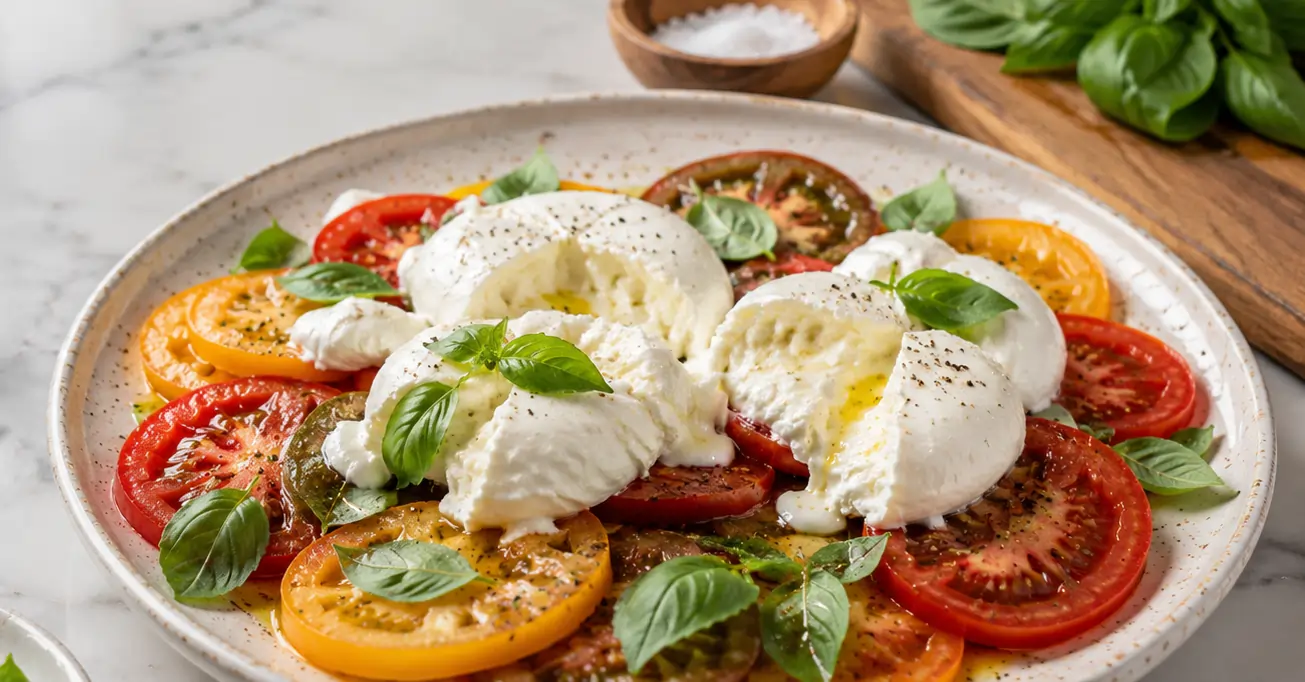
I’ll be honest, the first time I made burrata caprese salad, I wasn’t even trying to impress anyone. It was a Tuesday, I had a burrata ball sitting in my fridge that I’d bought on impulse, and dinner needed to happen fast. Twenty minutes later, my husband walked in, saw the plate, and asked what fancy restaurant I’d ordered from. That’s the moment I realized this salad is basically a cheat code.
Here’s why it matters: most of us don’t have time to cook elaborate meals every night, but we still want food that feels special. Burrata caprese salad solves that problem in a way almost nothing else does. There’s no stove involved, no complicated technique, and no long ingredient list, just a handful of good, ripe ingredients arranged with a little intention.
What you’ll get from this guide is everything you need to make it well: which tomatoes actually matter, how to handle burrata so the creamy center doesn’t just run off the plate, and a few tricks I picked up after making this dish probably a hundred times over the years (some of those attempts were, admittedly, soggy disasters before I figured out the salt trick, more on that in a minute).
So if you’re staring down a rough day, a last-minute guest, or just a craving for something fresh and rich at the same time, stick around. This one’s worth the five minutes it takes.
What Exactly Is Burrata Caprese Salad?
Traditional caprese salad has been around forever: tomatoes, basil, and firm mozzarella, usually finished with olive oil. Burrata caprese salad takes that same foundation and swaps in burrata, which is a different animal entirely. Regular mozzarella is solid all the way through. Burrata is a pouch of mozzarella filled with soft curds and cream, so when you cut into it, the inside spills out like a built-in sauce.
That’s really the whole appeal. You’re not adding a dressing; the cheese is the dressing once you break it open. Pair that with sweet, juicy tomatoes and peppery fresh basil, and you’ve got a dish that’s somehow both simple and indulgent at the same time.
Why This Salad Deserves a Spot in Your Regular Rotation
I think people underestimate how often a “no-cook” recipe can save an evening. There’s real value in having something in your back pocket that doesn’t require turning on the oven, especially in the middle of summer when the last thing you want is a hot kitchen.
A few things make this dish stand out beyond convenience:
- It’s genuinely fast. From fridge to table in under fifteen minutes, easily.
- It photographs well, which matters more than we’d like to admit if you’re hosting or posting.
- It’s naturally gluten-free, so it works for potlucks and mixed dietary crowds without extra thought.
- It scales up or down easily, one burrata ball for two people, or three or four for a dinner party spread.
And honestly? It’s forgiving. Even if your tomato slices are a little uneven or your basil tear job isn’t perfectly artistic, the dish still looks intentional. That’s rare for something this quick.
How to Make Burrata Caprese Salad
Ingredients You’ll Need
- 2 balls of fresh burrata cheese
- 3 large ripe tomatoes (heirloom if you can find them, the color variation makes a real difference visually)
- A generous handful of fresh basil leaves
- 3 tablespoons extra-virgin olive oil
- 1 tablespoon balsamic glaze (optional, but recommended)
- Flaky sea salt, to taste
- Freshly cracked black pepper, to taste
Step 1: Slice and Arrange the Tomatoes
Start with tomatoes that are actually ripe, not the pale, slightly hard ones that have been sitting in the fridge for a week. Slice them into rounds or wedges, whichever you prefer, and lay them across a wide platter with some overlap. This isn’t just for looks; it creates a base that catches the oil and cheese as they settle in later.
If you notice your tomatoes are releasing a lot of liquid, salt them lightly and let them sit for about five minutes before moving on. Pour off the excess water. This one step prevents the whole plate from turning watery, which is the most common mistake people make with this dish.
Step 2: Add the Burrata and Basil
Pat the burrata dry; it usually comes packed in liquid, and you don’t want to carry that over onto your platter. From here, you have a choice: place the balls whole in the center, or tear them open right on the platter so the creamy interior spills naturally over the tomatoes. I almost always tear mine open. It’s messier, sure, but that’s the point.
Tear your basil leaves by hand instead of cutting them with a knife. Cutting bruises the edges and turns them dark within minutes; tearing keeps them bright and fragrant for longer.
Step 3: Finish With Oil, Salt, and Pepper
Drizzle the olive oil generously over everything, making sure it reaches both the cheese and the tomatoes. If you’re using balsamic glaze, this is the moment for it; a light zigzag across the top does the trick. Finish with flaky sea salt and a few good cracks of black pepper.
Serve it right away, ideally while everything is still close to room temperature. Cold burrata doesn’t have the same creamy pull, and cold tomatoes taste noticeably flatter than ones that have had a chance to warm up a bit.
What to Serve Alongside It
This salad holds its own, but a few pairings take it further:
- Crusty bread, non-negotiable, in my opinion. You need something to mop up the leftover oil and tomato juice.
- A simple arugula salad with lemon vinaigrette, for a peppery contrast.
- Grilled chicken or seared salmon, if you want to turn it into a full meal.
- A crisp white wine like Pinot Grigio, or a chilled rosé if that’s more your speed.
If you’re building an antipasto-style spread, add some prosciutto or salami alongside it; the salty cured meat plays really well against the creamy cheese.
A Few Tips I’ve Learned the Hard Way
Don’t refrigerate right up until serving. Pull both the tomatoes and the burrata out about 30–45 minutes before you plan to eat. Flavor and texture both improve noticeably at closer-to-room temperature.
Invest in decent olive oil if you can. Since nothing here is cooked, the oil’s flavor really comes through; a mediocre one will flatten the whole dish.
If watery tomatoes are a recurring problem for you, the salt-and-drain trick mentioned above is worth doing every time, not just when it looks especially juicy.
And don’t be afraid to experiment. Sliced peaches in the summer, a spoonful of pesto, or even a few slices of prosciutto tucked between the tomatoes can all work without throwing off the balance of the dish.
Storage Notes
This isn’t really a leftover dish. Once the burrata is cut open, moisture starts working its way into everything else on the plate, and the basil wilts faster than you’d expect. If you do have extra, store it in an airtight container for up to a day, but skip reheating entirely. Warmed burrata on its own is fine; a reheated caprese salad is not something I’d recommend to anyone.
If you’re stuck with leftovers, chop everything up and toss it through warm pasta. The cheese melts down into something close to a quick, creamy sauce, and very little goes to waste.
Frequently Asked Questions
Can I use regular mozzarella instead of burrata?
You can, but you’ll lose that soft, creamy center that makes this dish stand out. It becomes a more traditional caprese at that point, still good, just a different experience.
How do I keep the salad from getting watery?
Salt your tomato slices for about five minutes before assembling and drain off any liquid that collects. This is the single biggest factor in keeping the plate from turning soupy.
Can I make this ahead of time?
Not really recommended. The dish is best assembled right before serving. You can prep the tomatoes and have your ingredients ready, but hold off on cutting into the burrata until you’re ready to eat.
Is burrata caprese salad healthy?
It offers protein and calcium from the cheese along with vitamins from the tomatoes and basil, though burrata is higher in fat than regular mozzarella, given the cream center. Moderation is the key word here, as with most rich foods.
What’s the best way to pick ripe tomatoes for this?
Look for tomatoes that give slightly under gentle pressure and smell faintly sweet at the stem. Heirloom varieties tend to have more complex flavor than standard round tomatoes, and their color variation makes the finished plate look more vibrant.
Can I use burrata straight from the fridge?
You can, but I wouldn’t recommend it. Cold burrata is firmer and less creamy inside. Letting it sit out for 20–30 minutes before serving makes a noticeable difference.
Final Thoughts
There’s something almost unfair about how little effort this dish requires relative to how good it tastes. No cooking, no complicated steps, and a handful of ingredients that do all the work themselves. Once you get the basics down- ripe tomatoes, well-drained if needed, room-temperature burrata, and hand-torn basil- you’ll find yourself reaching for this recipe more often than you’d expect. It’s the kind of dish that turns a plain weeknight into something that feels a little more thoughtful, without asking much of you at all.

Burrata Caprese Salad
4
servings10
minutes180
kcalIngredients
2 balls of fresh burrata cheese
3 large ripe tomatoes (heirloom preferred)
0.5 cups fresh basil leaves
3 tablespoons extra-virgin olive oil
1 tablespoon balsamic glaze (optional)
0.5 teaspoons flaky sea salt
0.3 teaspoons freshly cracked black pepper
Directions
- Slice the tomatoes:
Slice 3 large ripe tomatoes (heirloom preferred) into rounds or wedges and arrange with a light overlap on a wide platter. If they release a lot of liquid, sprinkle with a pinch of 0.5 teaspoons flaky sea salt and let sit 5 minutes - Add the burrata:
Pat 2 balls of fresh burrata cheese dry and either place whole in the center of the tomatoes or tear open right on the platter so the creamy center spills out. - Add the basil:
Tear 0.5 cups of fresh basil leaves by hand (don’t cut with a knife) and scatter over the platter. - Drizzle and season:
Drizzle 3 tablespoons of extra-virgin olive oil generously over the cheese and tomatoes. Add a light zigzag of 1 tablespoon balsamic glaze (optional) if using, then finish with 0.5 teaspoons flaky sea salt and 0.3 teaspoons freshly cracked black pepper. - Serve immediately:
Serve right away while everything is close to room temperature for the creamiest texture and best flavor.
Notes
- Best made right before serving, not a make-ahead dish. Pull tomatoes and burrata out of the fridge 30-45 minutes early for the best texture and flavor. Leftovers (if any) are great tossed through warm pasta rather than eaten cold.